Journalist and media professional currently based in Los Angeles, California. Focusing on science and technology.

Journalist and media professional currently based in Los Angeles, California. Focusing on science and technology.
I am rather excited about SOFIA, the airborne infrared telescope which is now flying its first scientific missions. I am hoping to do a lot of coverage on it in the future.
The program is a collaboration between NASA and the German aerospace agency, DLR. Much cheaper and more flexible than an infrared space telescope, it it hoped that the research flights will continue for 20 years or more.
I recently attended an in-depth press briefing at the Dryden Flight Research Center at U.S. Air Force Plant 42, where the aircraft is now based.
Among those present were NASA’s SOFIA Program Manager Robert R. Meyer, DLR’s Program Manager Alois Himmes, the Director of the Dryden Flight Research Center at Edwards AFB David D. McBride, Associate Center Director at NASA/Ames Steve Zornetzer, Director of Science at Ames Michael Bicay, SOFIA Project Scientist Pamela Marcum, Cornell University astronomer Terry Herter, Division Head for Submillimeter Technology at the Max-Planck Institut for Radioastronomie Rolf Güssen and Science Mission and Operations Director Erick Young.

Looking at the SOFIA aircraft from within its hangar at the Dryden facility at Air Force Plant 42. The door revealing the infrared telescope is open. Photo: Reinhard Kargl. Click to enlarge.

Telescope Assembly and SI Integration Manager Thomas Keiling probably got a sunburn while patiently explaining his "baby" to everyone wanting to know details. Photo: Reinhard Kargl. Click to enlarge.

Journalist and media professional currently based in Los Angeles, California. Focusing on science and technology.
These are super slow motion films of a Russian T-90, a 46.5 ton battle tank with steel-composite reactive armor, firing 125 mm shells. The film was shot at 18,000 frames per second.
From another angle:

Journalist and media professional currently based in Los Angeles, California. Focusing on science and technology.
Opportunity has been packed for its journey to the launch site in Florida. Here are the four days of work, compressed into a 1-minute time-lapse video:

Journalist and media professional currently based in Los Angeles, California. Focusing on science and technology.
Journalist and media professional currently based in Los Angeles, California. Focusing on science and technology.
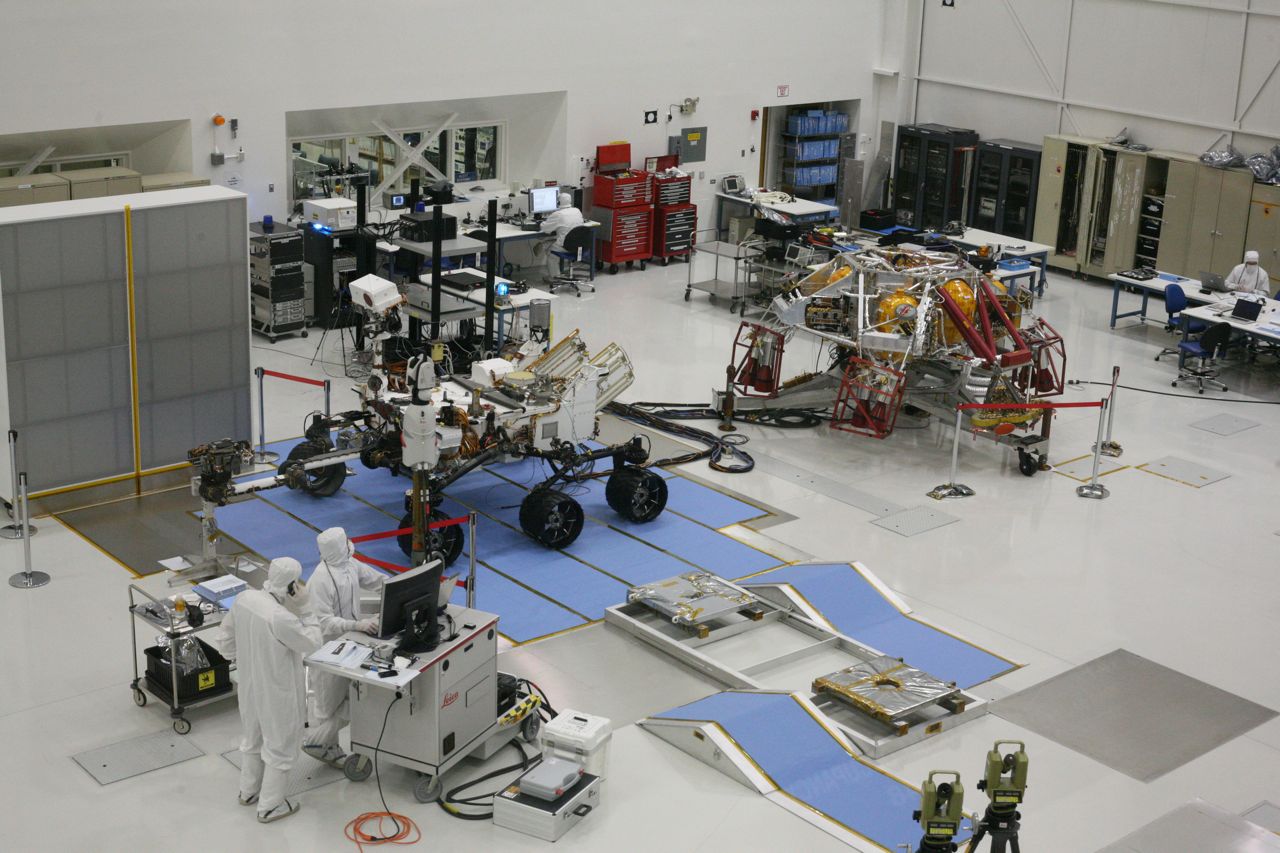
While spending a day at the Jet Propulsion Laboratory last week, I had a chance to say “good-bye” to NASA’s upcoming Mars rover, Curiosity (aka Mars Science Laboratory). Next week, the rover and its descent platform will be crated and driven by truck to a nearby March Air Reserve Base. From there, it will travel by cargo plane to Cape Canaveral in Florida for launch.
In this image, the spacecraft is undergoing final checks. (The rover can be seen on the left. Nearby on the right is its unique “Sky Crane”, a rocket propelled, floating landing platform from which the rover will rappel down to the surface of Mars).

Mars Science Laboratory ("Curiosity") being checked before it leaves for the launch pad. Photo: Reinhard Kargl, 2011
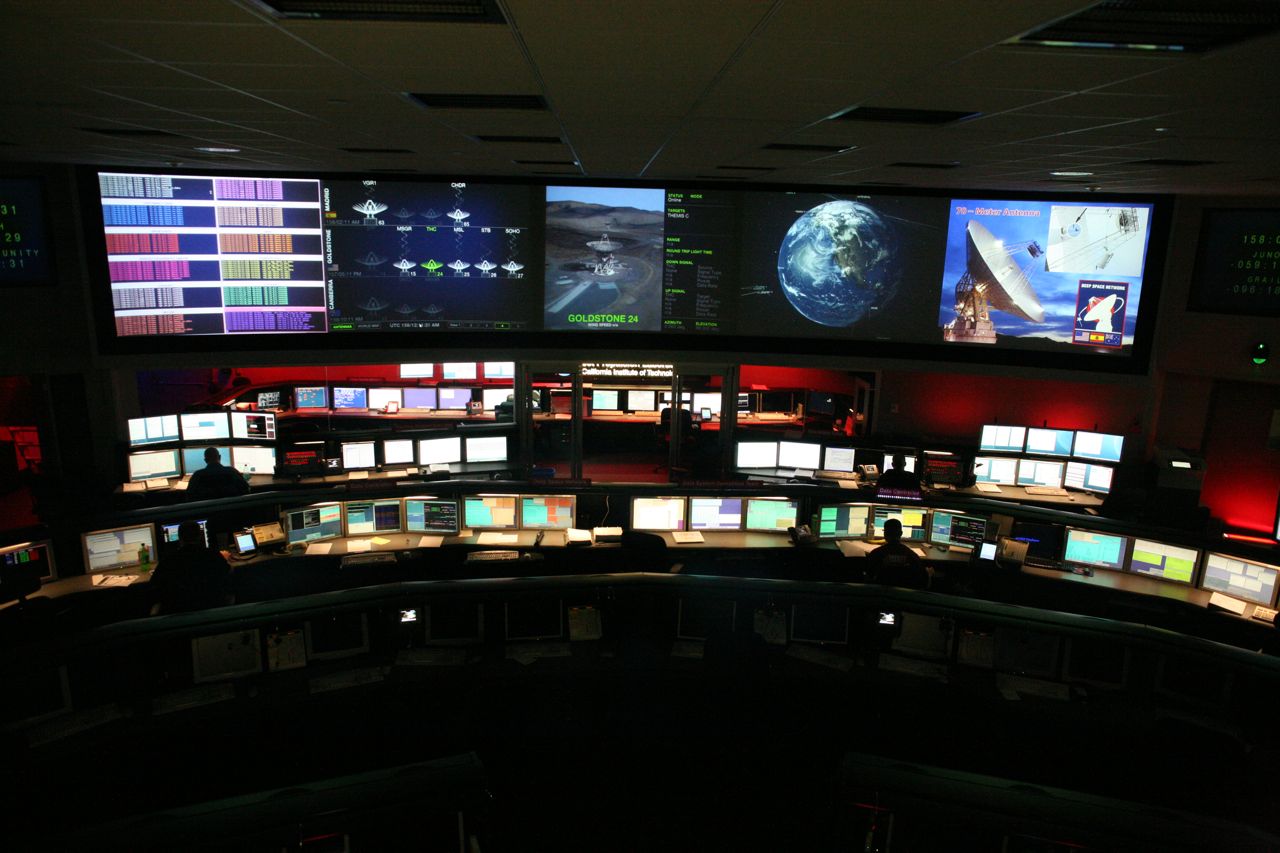
Here is JPL’s control room. From here, communication with all of JPL’s unmanned spacecraft is maintained around the clock.
I am very excited about this mission and hope everything goes well. It is very complex for sure. Here is a simulation of how it is supposed to work:

Journalist and media professional currently based in Los Angeles, California. Focusing on science and technology.
NASA has invited me to spend the entire day of Monday, June 6 at the Jet Propulsion Laboratory (NASA’s center for unmanned spaceflight).
All day long, I will be visiting the facilities where NASA’s unmanned spacecraft are designed, built and controlled. I will be chatting with engineers and scientists about upcoming missions and advances. Among other spacecraft, I will see the upcoming Mars Rover “Curiosity”, saying final good-byes before it is sent to Cape Canaveral for launch.
Throughout the day, I will be reporting live via Twitter (and other social media). Please follow my feed!
http://twitter.com/TweetReinhard (in English)
or
http://twitter.com/TwitReinhard (in German)
Twitter is a new medium which now has over 200 million users. Twitter messages (called “Tweets”) are brief messages of 140 characters or less. (This means they can be received on cellphones — but also on the worldwide web).
Although they are brief, “Tweets” may contain links to photographs, videos, articles, online posts or other material of interest.
You do not need a Twitter account to read the messages on your computer. But it would be helpful if you have one. (It does not cost anything). Having a Twitter account enables you to selectively and automatically follow updates from individuals, institutes and organizations, and it also allows you to “talk back”.
Hoping to see you in cyberspace!

Journalist and media professional currently based in Los Angeles, California. Focusing on science and technology.
This was driving me crazy: I once took a series of photographs of Maria Altmann, the heiress of several Gustav Klimt paintings. (She successfully sued the Republic of Austria for the return of famous art worth $328 million, and passed away earlier this year. See my other blog post on Maria Altmann).
But the pictures I had taken went missing. As I was going through old boxes yesterday, the set re-emerged. (It turns out I had just tossed them into a box, along with all kinds of other “stuff”, instead of filing them away). Here is what I think is the best image from the series:
Previously unpublished and available for licensing. Original: Ilford XP2 Super, 35 mm negative film.

Journalist and media professional currently based in Los Angeles, California. Focusing on science and technology.
Yesterday was the 100th anniversary of the Indy 500 auto race. I followed it on TV and was astounded by the many mishaps in the pits. They were all caused by the driver taking off before the crewmen had completed their tasks. This is how races are lost. Sometimes, lives are put in jeopardy as wheels and other parts turn into projectiles, or racing fuel catches fire.
One question bugs me: why is there no “lollipop man” — like in Formula 1? This is a crew member whose sole job consists of monitoring the pit crew to make sure everyone is done. While they work, he holds a “stop” (or “brake”) sign on a long stick (the “lollipop”) in front of the driver’s eyes. Once all crew members signal “clear”, the lollipop man turns the “stop” sign to “go” and jumps out of the way as the driver guns the engine.
This would be a simple solution to an old problem. I can’t figure out why Indy 500 teams are not employing it. Overall, it seems to me that pit stops in Indy racing are by far not as sophisticated compared to what happens in Formula 1.
Watch this clip from a BBC documentary:

Journalist and media professional currently based in Los Angeles, California. Focusing on science and technology.
Somehow it seems that these guys were having more fun than their counterparts from today. I love the ties! (Seriously — I collect vintage ties from the 1930s to the 1950s).

Waiting for the shot at Lincoln Heights jail house, circa 1948. Photograph © Los Angeles Times Archive. Click to enlarge.
This pictures is from the Los Angeles Times archive. See more more from the series here.

Journalist and media professional currently based in Los Angeles, California. Focusing on science and technology.