Category Archives: English

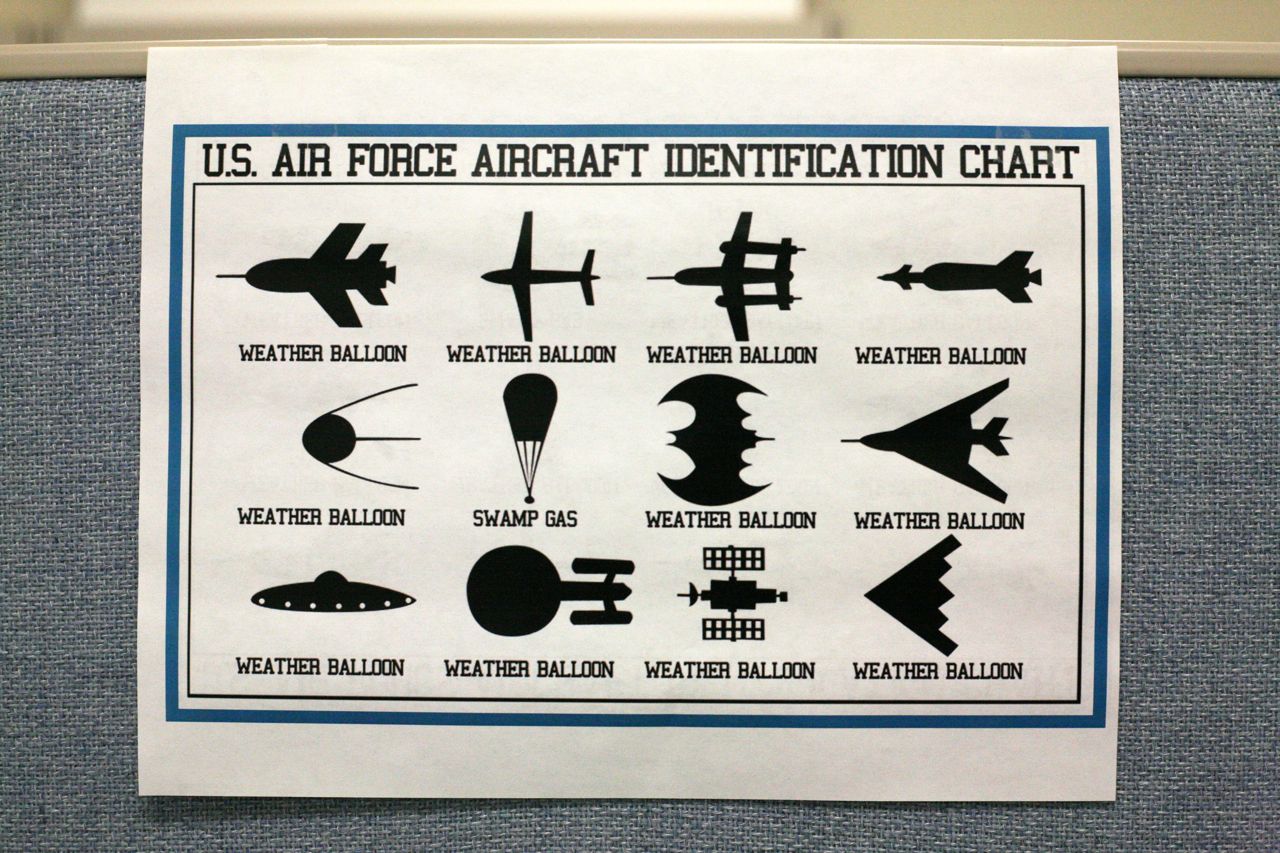
Must Have Been A Weather Balloon

Flying aboard SOFIA (the Stratospheric Observatory For Infrared Astronomy) above Air Force Plant 42 in Palmdale ….

… we spot a bunch of weather balloons.

(Click to enlarge).

Related Articles:

TweetReinhard

Last Shuttle Launch: Good-bye, Childhood Friends. Time To Grow Up.

I remember watching the first space shuttle launch on TV. I was still a boy living at my parents’ house. The date was April 12, 1981 — and I was very excited.

I was holding my breath during liftoff. After Columbia had reached orbit and the TV station switched back to its normal programming, I stepped outside into our backyard. It was a warm and beautiful spring day, a blue sky broken up by gorgeous cumulus clouds.

Somewhere up there, I imagined, John Young and Robert Crippen would soon pass overhead. These guys were the epitome of coolness. For many years thereafter, I dreamed of being an astronaut or a top engineer launching rockets and spaceships to faraway places.

Today I was watching the shuttle’s last launch. No longer on TV, but via NASA’s media stream on the Internet. Imagine that! While the shuttle has hardly changed in three decades, the world has moved on profoundly.

Let’s face the truth. The shuttle demonstrated what was possible 30 years ago. If this still impresses you, I hope you are not working in today’s space program.

Cellphone inventor Marty Cooper introduced the mobile phone before the first shuttle flight. Are you impressed with it?

At its first launch, there was no World Wide Web. No live streaming. No digital social networks connecting people from all over the world. Hardly anyone had a computer. There were no cellphones, no digital cameras, no digital music downloads. No Internet chats and no video calls. You could not carry your entire music library with you. Or tens of thousands of images.

You could not simply pull up information when you needed it. I remember being fascinated with my first digital watch at about the same time. A miraculous new invention, the Compact Disc was introduced to the public in the same year.
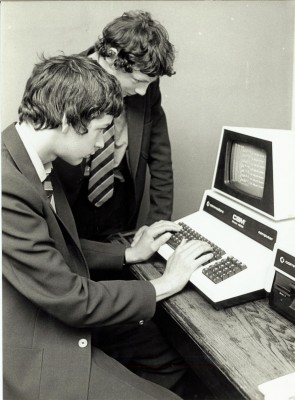
The hipsters using this computer before the shuttle's first flight must now be approaching retirement age. (I have a $20 watch with more computing power -- but shuttle operations did not get any cheaper).

For my generation, the most inspiring technological breakthroughs did not come from the space program, and certainly not from the space shuttle. Most of my generation looks at it as a 30-year old curiosity frozen in pre-historic times. Way before laptops and iPods. (The dark ages).

We will forever disagree on the question whether the shuttle was worthwhile or not. Personally, I don’t think so. I am not saying that the shuttle program lacked achievements — far from it. But I lament the greater achievements which would have been possible instead, for the same expense.

The program’s achilles heel wasn’t so much its cost in cash, but its cost on NASA culture. The complexity of the system, and its dangerous nature. This petrified NASA. Locked the agency and its subcontractors on an iron-clad course, which over the years became impossible to change. On this course, tens of thousands of highly qualified (and influential) people around the country built their entire careers. Many never did anything else — nor did they have to. Even today, it will be quite impossible to convince these armies of people that there may be better was of doing things.


WERNHER VON BRAUN WAS SHAFTED

I maintain that the biggest technological mistake the U.S. ever made with respect to space exploration was the sudden discontinuation of the Saturn system. Continued development of new Saturn variants (Wernher von Braun‘s team had plenty of ideas for this) would have achieved much more than the shuttle ever did.
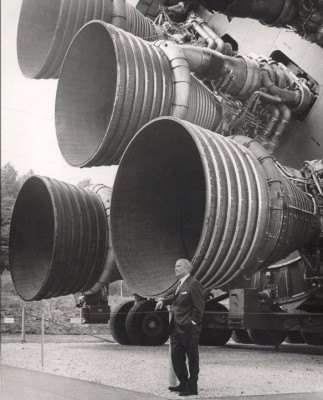
Wernher von Braun posing at the business end of the 1st stage of Saturn V. He knew all along that the shuttle concept NASA settled on was not a suitable replacement for the Saturn rockets. Von Braun's reservations and warnings were dismissed. Click to enlarge.

With the Saturn V, the space station, in its current configuration, would have been technically possible 20 years ago. If the U.S. had followed another crucial recommendation of von Braun’s team (the development of nuclear propulsion for deep space missions), we could have people on Mars right now.

We often hear that the Saturn system had become unaffordable after the moon landings. This argument amounts to circular logic. The only reasons why Saturn was discontinued: to free up funds for the shuttle’s development — and because of internal politics.

I strongly suspect that von Braun (and his Huntsville team) had become too powerful and influential for some people’s taste and personal ambitions. I will say it out loud: After the success of Apollo, von Braun was shafted. (For the complete story, see Michael J. Neufeld’s biography, Von Braun, Dreamer of Space / Engineer of War, ISBN978-0-307-26292-9).

NASA estimates that each shuttle launch costs about $450 million. However, Roger A. Pielke, Jr. has calculated that the Space Shuttle program has cost about $170 billion (2008 dollars) through early 2008. This works out to an average cost per flight of about US$1.5 billion.[1]

By comparison, a Saturn V launch would cost about $1.1 billion in today’s money.[2]

The difference? The shuttle can lift a payload of 24,400 kg into low Earth orbit. But one Saturn V could haul 118,000 kg. In other words, one Saturn V can launch the same mass as five shuttle flights! (Even more would have been possible with the future Saturn variants von Braun had on the drawing board).

Imagine the kind of space telescopes, Mars rovers and space stations that would have been possible with the Saturn rockets instead of the shuttle!

Today, of course, is the shuttle’s last hurrah, and we should not spoil the party. Even to me, the shuttle feels a bit like a childhood friend. The people who worked on it deserve respect.

After Columbia has safely returned to Earth, the orbiters should land at museums. And we, having long outgrown our childhood friends, should finally launch into the future.

Perhaps we should start by re-reading the papers Wernher von Braun’s team presented back then. Back in the dark ages.


Related Articles:

TweetReinhard

Please Don’t Ruin The Anthem!

Dear Americans:

It gives me the creeps when you shamelessly violate and mangle the national anthem. Yes, going over one and a half octaves, it is a challenging song to sing. But it is the national anthem, and creative interpretations of its written notes are uncalled for. Altering it is as offensive as abusing the national flag to make a personal statement.

So here is a tutorial, inspired by bass violinist Jenny Hersch.

[Land of the] free is exactly the same note as [rock-ets’ red] glare! Look at the sheet, if you don’t believe it!

And both these words are about the same length! So for God’s sake, it’s not “freeeeeeeeeeeeeeeeeeeeeeeeeeeeee”!  No, no, no!!!! It’s simply “free”!

And one more thing: the lowest note is right at the beginning: [oh] say [can you see]. And it is the same note as gleam-ing and stream-ing and [whose broad] stripes [and bright stars].

If you are like me (not tone deaf but at the same time incapable of singing in tune) just do what I do: Stand with pride — but shut up.

In the name of those equipped with good ears but lacking a singing voice, I thank you.

Related Articles:

TweetReinhard

SOFIA: Flying High For Astronomy

I am rather excited about SOFIA, the airborne infrared telescope which is now flying its first scientific missions. I am hoping to do a lot of coverage on it in the future.

The program is a collaboration between NASA and the German aerospace agency, DLR. Much cheaper and more flexible than an infrared space telescope, it it hoped that the research flights will continue for 20 years or more.

I recently attended an in-depth press briefing at the Dryden Flight Research Center at U.S. Air Force Plant 42, where the aircraft is now based.

Among those present were NASA’s SOFIA Program Manager Robert R. Meyer, DLR’s Program Manager Alois Himmes, the Director of the Dryden Flight Research Center at Edwards AFB David D. McBride, Associate Center Director at NASA/Ames Steve Zornetzer, Director of Science at Ames Michael Bicay, SOFIA Project Scientist Pamela Marcum, Cornell University astronomer Terry Herter, Division Head for Submillimeter Technology at the Max-Planck Institut for Radioastronomie Rolf Güssen and Science Mission and Operations Director Erick Young.

Looking at the SOFIA aircraft from within its hangar at the Dryden facility at Air Force Plant 42. The door revealing the infrared telescope is open. Photo: Reinhard Kargl. Click to enlarge.

Telescope Assembly and SI Integration Manager Thomas Keiling probably got a sunburn while patiently explaining his "baby" to everyone wanting to know details. Photo: Reinhard Kargl. Click to enlarge.

Related Articles:

TweetReinhard

Boom!

These are super slow motion films of a Russian T-90, a 46.5 ton battle tank with steel-composite reactive armor, firing 125 mm shells. The film was shot at 18,000 frames per second.

From another angle:

Related Articles:

TweetReinhard

How To Package A Mars Rover

Opportunity has been packed for its journey to the launch site in Florida. Here are the four days of work, compressed into a 1-minute time-lapse video:

Related Articles:

TweetReinhard

Where Grownups Go To Play

Photo: Reinhard Kargl, 2011. Click to enlarge.

Related Articles:

TweetReinhard

Goodbye Curiosity

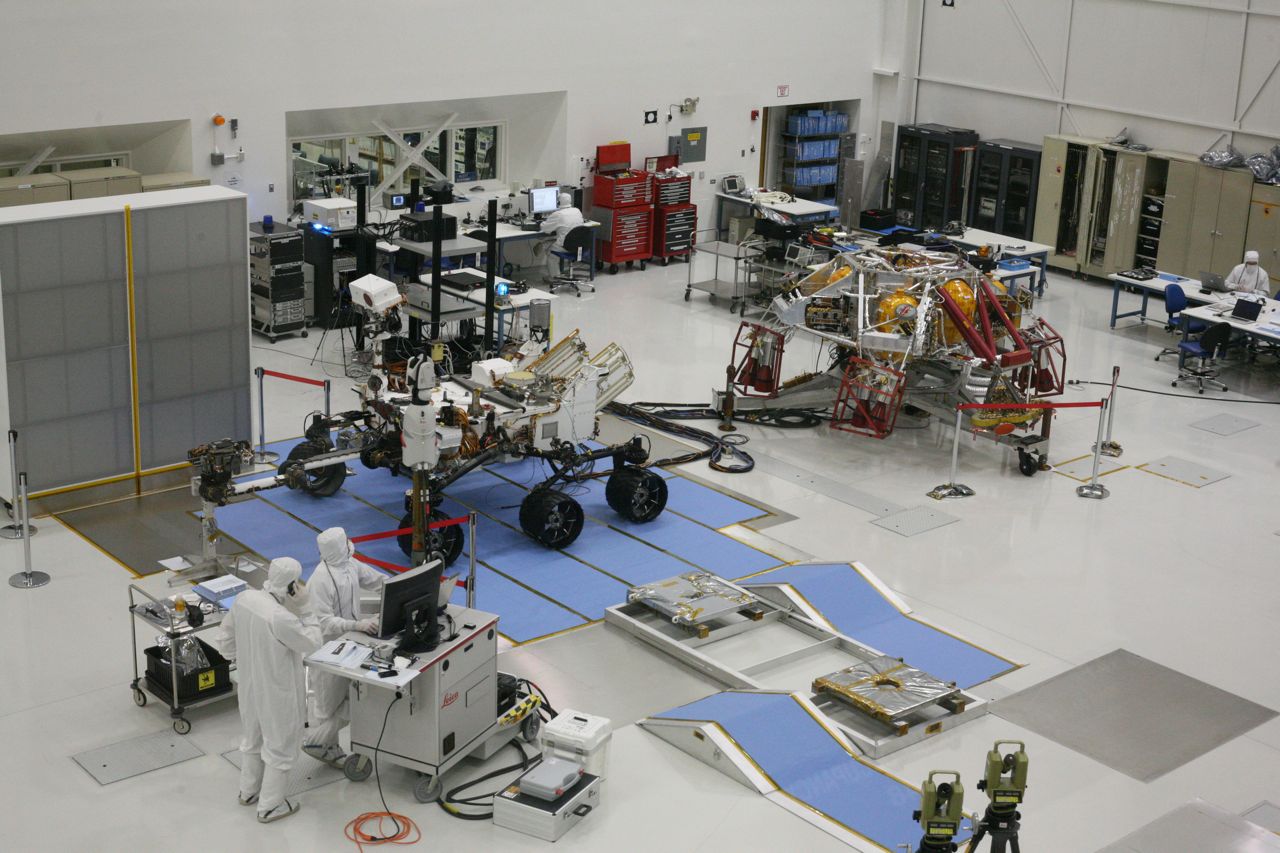
While spending a day at the Jet Propulsion Laboratory last week, I had a chance to say “good-bye” to NASA’s upcoming Mars rover, Curiosity (aka Mars Science Laboratory). Next week, the rover and its descent platform will be crated and driven by truck to a nearby March Air Reserve Base. From there, it will travel by cargo plane to Cape Canaveral in Florida for launch.

In this image, the spacecraft is undergoing final checks. (The rover can be seen on the left. Nearby on the right is its unique “Sky Crane”, a rocket propelled, floating landing platform from which the rover will rappel down to the surface of Mars).

Mars Science Laboratory ("Curiosity") being checked before it leaves for the launch pad. Photo: Reinhard Kargl, 2011

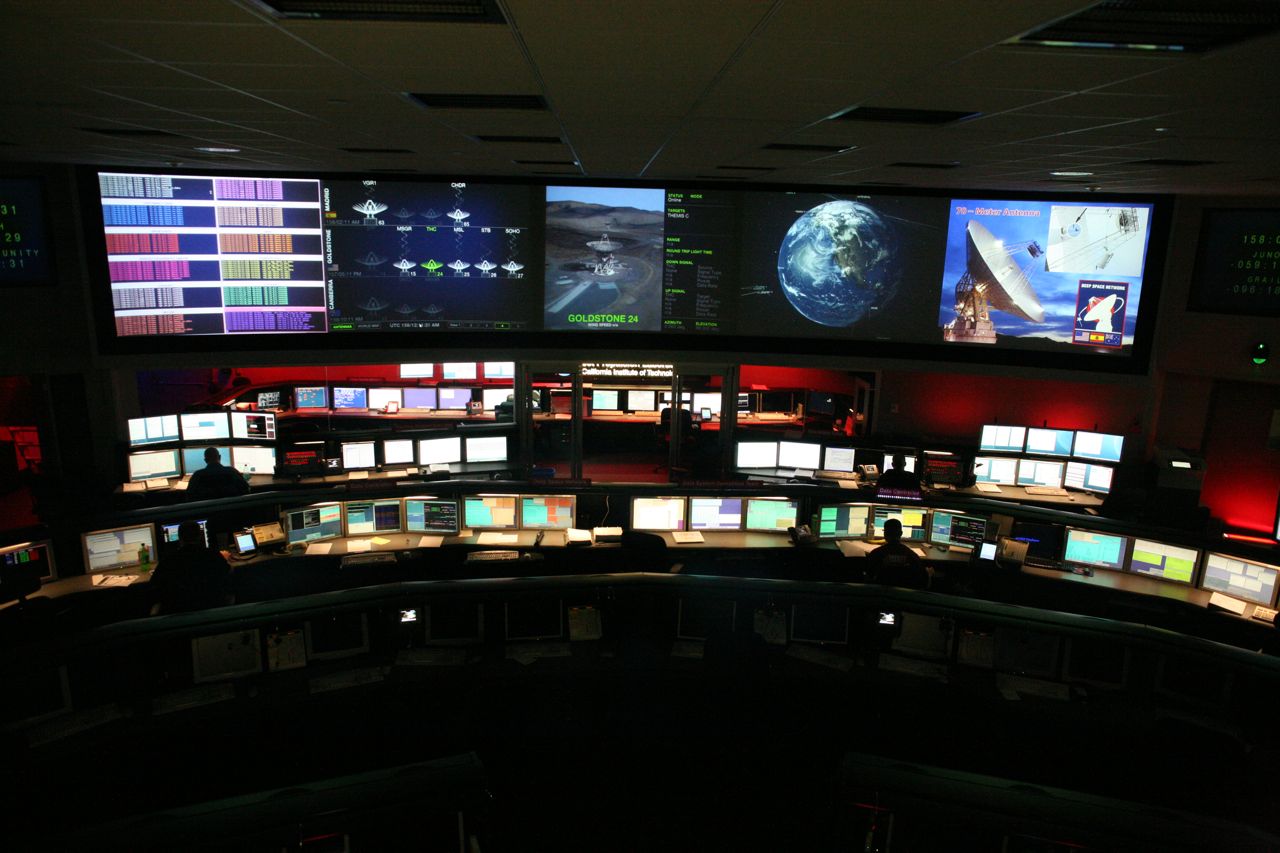
Here is JPL’s control room. From here, communication with all of JPL’s unmanned spacecraft is maintained around the clock.

JPL Operations Control Center. Photo: Reinhard Kargl, 2011. Click to enlarge.

I am very excited about this mission and hope everything goes well. It is very complex for sure. Here is a simulation of how it is supposed to work:


Related Articles:

TweetReinhard

Reporting Live From NASA/JPL

NASA has invited me to spend the entire day of Monday, June 6 at the Jet Propulsion Laboratory (NASA’s center for unmanned spaceflight).

All day long, I will be visiting the facilities where NASA’s unmanned spacecraft are designed, built and controlled. I will be chatting with engineers and scientists about upcoming missions and advances. Among other spacecraft, I will see the upcoming Mars Rover “Curiosity”, saying final good-byes before it is sent to Cape Canaveral for launch.

Throughout the day, I will be reporting live via Twitter (and other social media). Please follow my feed!

http://twitter.com/TweetReinhard (in English)

or

http://twitter.com/TwitReinhard (in German)

Twitter is a new medium which now has over 200 million users. Twitter messages (called “Tweets”) are brief messages of 140 characters or less. (This means they can be received on cellphones — but also on the worldwide web).

Although they are brief, “Tweets” may contain links to photographs, videos, articles, online posts or other material of interest.

You do not need a Twitter account to read the messages on your computer. But it would be helpful if you have one. (It does not cost anything). Having a Twitter account enables you to selectively and automatically follow updates from individuals, institutes and organizations, and it also allows you to “talk back”.

Hoping to see you in cyberspace!

Related Articles:

TweetReinhard

Lost And Found: Portrait Of Maria Altmann

This was driving me crazy: I once took a series of photographs of Maria Altmann, the heiress of several Gustav Klimt paintings. (She successfully sued the Republic of Austria for the return of famous art worth $328 million, and passed away earlier this year. See my other blog post on Maria Altmann).

But the pictures I had taken went missing. As I was going through old boxes yesterday, the set re-emerged. (It turns out I had just tossed them into a box, along with all kinds of other “stuff”, instead of filing them away). Here is what I think is the best image from the series:

Maria Altmann Portrait

Maria Altmann in her garden. Click to enlarge. © Reinhard Kargl 2000

Previously unpublished and available for licensing. Original: Ilford XP2 Super, 35 mm negative film.

Related Articles:

TweetReinhard