Category Archives: English

Lacking Vaccines, 78 Humans And 800,000 Dogs Killed in Bali

Here’s a wake-up call to members of the anti-science, flat-earth society who believe that vaccines are more harmful than infectious diseases: due to a shortage of vaccines, rabies is now out of control in Bali.

The toll of infection so far: 600,000 dogs and at least 78 humans — most of whom were children. Many deaths have gone unreported. In desperation, the government has ordered the killing of an additional 200,000 dogs. And this in a nation known for revering dogs!

Around the world, rabies kills some 55,000 people annually, according to the WHO. Most deaths happen after bites from unvaccinated dogs. Most human fatalities occur when the human vaccine is not given immediately after a dog bite.

In Bali, about 30,000 dog bites have been reported in the last half year. And in most cases, a lack of vaccine means that doctors can do little but dress up the wound and send the patient home while hoping for the best.

Rabies is a serious, very infectious virus, but we have countermeasures, and nobody should have to die from it.

The Associated Press has more on this story.

From the Centers for Disease Control, more on rabies.

Related Articles:

TweetReinhard

Just Published: Getting an Earful

Some schools are now using voice amplification systems in their classrooms, and I have been working on an article about their experiences. Here is the (just published) online version:

http://thejournal.com/articles/2010/08/01/giving-them-an-earful.asp

(THE Journal is a specialty publication covering technology in education).

Related Articles:

TweetReinhard

Night Hike

Something I love about the Los Angeles area is that despite all its insane sprawl, it still offers the possibility of escape from the urban mess; to seek moments of refuge and relative solitude in the wilderness of the mountain chains surrounding the basin.

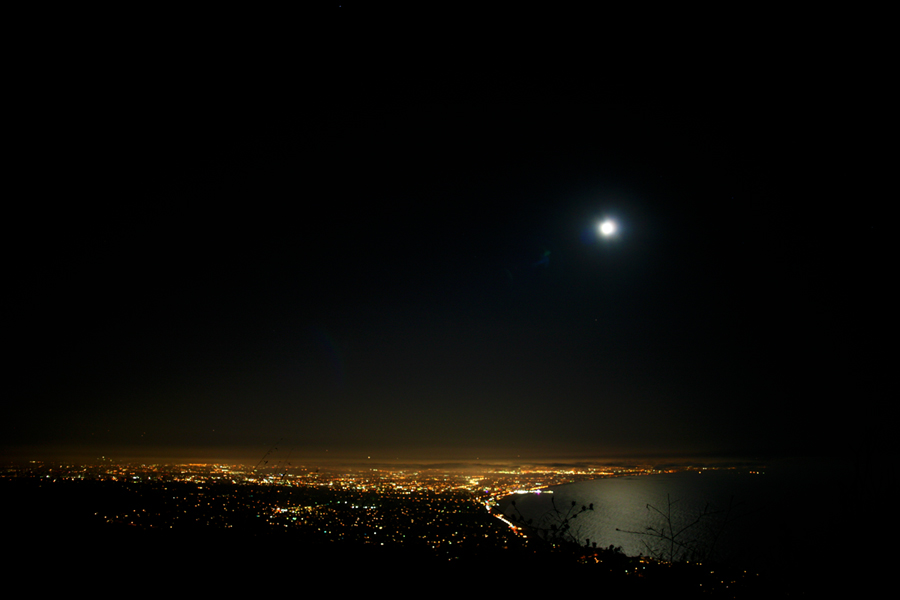
These pictures were taken on a night hike last weekend. (Click to enlarge).

Venus is hanging low in the east as the Sun is setting over the Santa Monica Mountains and the Pacific Ocean. Photo: Reinhard Kargl

Seen from Parker Mesa Overlook in the Santa Monica Mountains, the Moon has risen over West Los Angeles and the Santa Monica Bay. Photo: Reinhard Kargl

Related Articles:

TweetReinhard

A Historical Instrument

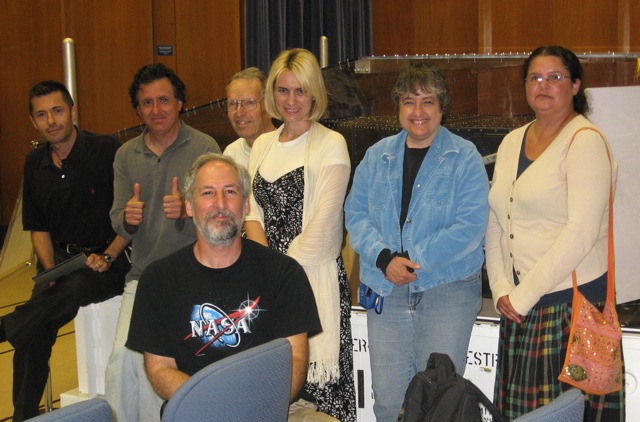
Last night, a small group from our local astronomy organization attended a lecture at NASA’s Jet Propulsion Laboratory.

In this picture, we are posing in front of the Wide Field and Planetary Camera 2, which will soon be residing at the Smithsonian Air and Space Museum.

A little bit of history: Soon after its launch in 1990, the orbiting Hubble Space Telescope‘s internal optics proved to be flawed, and the HST seemed doomed. But in 1993, NASA astronauts saved the day by installing the instrument behind us during Space Shuttle mission STS-61. With the addition of this camera, the HST was fully operational. It went on to become one of the most important telescopes in history.

Among the countless, breathtaking images returned by the WFPC2 were the Hubble Deep Field in 1995, the Hourglass Nebula and Egg Nebula in 1996, and the Hubble Deep Field South in 1998.

During Shuttle Mission STS-125, WFPC2 was removed and replaced with the Wide Field Camera 3 as part of the mission’s first spacewalk on May 14, 2009. It was returned to Earth aboard Space Shuttle Atlantis, which landed at Edwards Air Force Base in California on May 24, 2009.

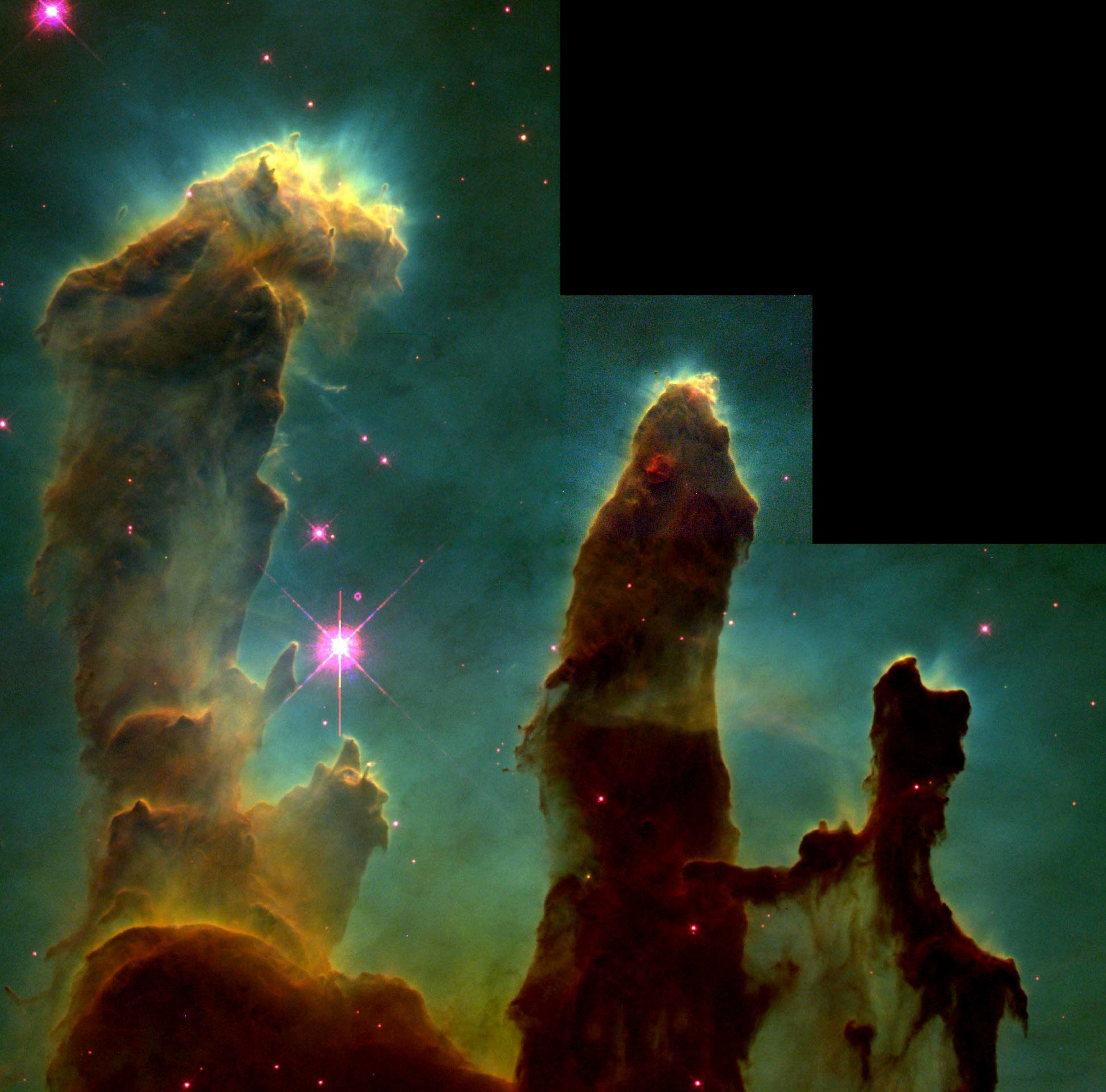
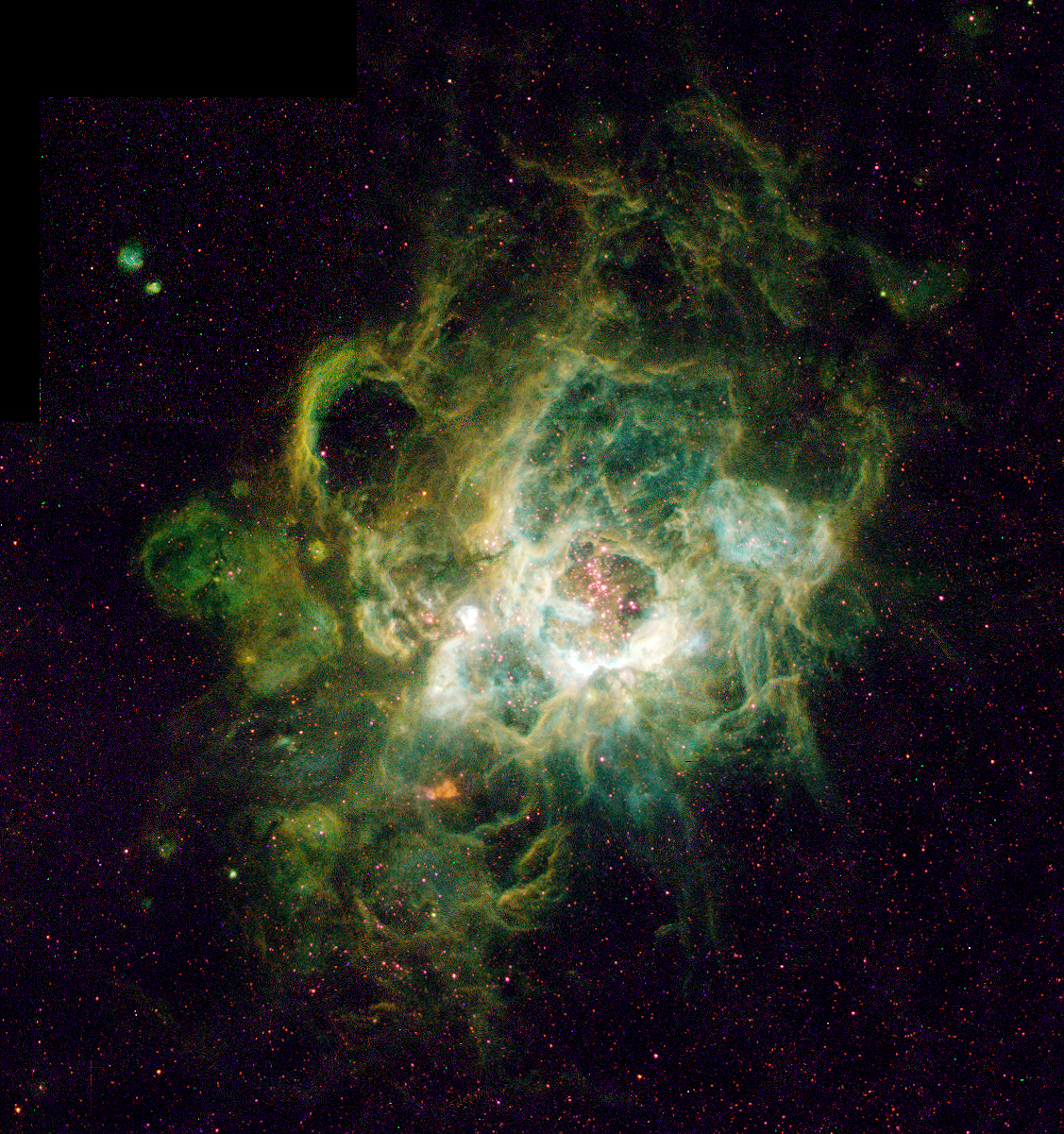
Here are some famous images NASA and ESA made with this camera.

6,500 light years from Earth are the "The "Pillars of Creation" within Eagle Nebula. Columns of gas and dust extend 57 trillion miles (97 trillion km) into space. New stars are forming here! In fact, our own Sun may have come from a structure similar to this. (Click to enlarge).

NGC 604, an area in the Triangulum Galaxy about 3 million light years away. In its center are massive stars, which illuminate and ionize gases in this region. New stars appear to be forming here. (Click to enlarge).

Related Articles:

TweetReinhard

The Mystery Truck

I have no idea why this old pick-up truck was parked on a Westside school campus at night. It was completely covered with rust and looked a little eerie in greenish light — as if it had appeared right out of the past.

Mystery Truck

Mystery Truck. Photo: Reinhard Kargl, 2010. (Added vignette and adjusted tint, exposure and sharpness digitally). Click to enlarge.

Related Articles:

TweetReinhard

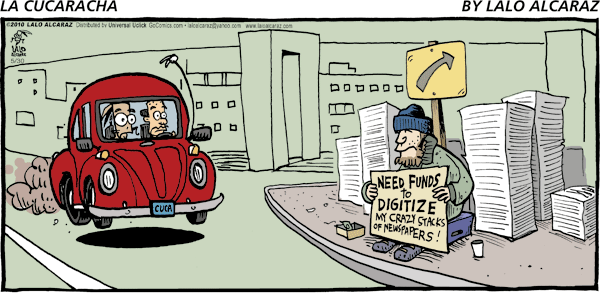
Crazy Stacks of Paper

I haven’t met a journalist who does not love books.  If obsessive book collecting were not enough, we usually have huge stacks of newspaper and magazine clippings, in which we often seem to suffocate.

What do I need? What should I keep, what should I toss? Just reviewing everything takes time. And when do I find the time to file everything away so I can actually find it when I need it??

It’s hopeless. Sometimes I fear I could end up like this one day:

Related Articles:

TweetReinhard

Crossing The Bridge to Nowhere

Trekking up and down the East Fork of the San Gabriel River last weekend, through intense heat and about 20 wildwater crossings, we found the mysterious Bridge to Nowhere.

Bridge to Nowhere. Sheep Mountain Wilderness, California. 34°16′59″N 117°44′48″W. Click to enlarge. Photo: Reinhard Kargl, 2010

Why is there a bridge in the middle of the wilderness?

I was wondering too.

Built in the San Gabriel Mountains in 1936, the 120 ft (27 m) high bridge was supposed to be part of a road connecting the San Gabriel Valley in Los Angeles County with Wrightwood in San Bernardino County. But the road was never completed.

After being overcome by a flood in March of 1938, the road construction project was abandoned.

The bridge remains, leading nowhere. It is accessible only on foot.

Continue reading

Related Articles:

TweetReinhard

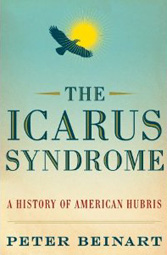
New Book: The Ikarus Sydrome – A History of American Hubris

In his new book, journalist Peter Beinart argues that when America’s optimist spirit became devoid of all limitations, the nation fell victim to hubris — the same euphoria that afflicts a gambler after winning a few times. As a result of feeling unstoppable, America began to project its power globally and beyond what is reasonable and affordable.

As an advocate of American Isolationism (and the ideas of Thomas Paine in particular), I know I will find this book to be a fascinating read.

Here are the author’s home page and blog.

ISBN: 9780061456466; ISBN10: 0061456462; Imprint: Harper; On Sale: 6/1/2010; Format: Hardcover; Trimsize: 6 x 9″; Pages: 496; $27.99;

Related Articles:

TweetReinhard

What Do 25,000 Oil Barrels Look Like?

Estimates of the amount of oil spilled from the still gushing BP well in the Gulf of Mexico range 25,000 to 60,000 barrels per day.

It’s hard to imagine how much this is. Here is a video simulation of 25,000 barrels, the lowest estimate. This animation was done with software normally used to produce video games. Impressive!

Related Articles:

TweetReinhard

Less Than Zero, Revisited

When I was a junior in college, one of my favorite books was Less Than Zero by Bret Easton Ellis. I read the German translation a few years after it came out. At the time, the novel piqued my interest in Los Angeles and laid the basis for my perception of the anthropological circus that makes up “Hollywood”.

25 years after the novel’s release, Ellis has now revived its twisted characters for his latest book, Imperial Bedrooms.

Blair and Trent now have a loveless marriage. Clay is a narcissistic but successful screenwriter (“with occasional production credits”), who attempts to have Julian killed. And Rip, of course, is still a villain.

I’ll put it on the ever growing “must read” list.

Related Articles:

TweetReinhard